Remember when you were a child on Christmas Eve night, all tucked into bed and finding it impossible to sleep because of the excitement that would ensue the next morning? Well, the adult version of that is being able to get out on the land, disappear in the sagebrush, and contribute to data collection.
When you buy a hunting tag in Oregon, you're directly funding conservation. Yes! Surcharges on those licenses fund programs such as the Fish Restoration and Enhancement and Wildlife Access and Habitat programs. The Oregon Department of Fish and Wildlife (ODFW) largely operates on revenue from hunting and fishing licenses, as well as federal taxes on hunting gear. All of that money is dedicated to wildlife management, habitat improvement, research, and land conservation.
Did you know that the Oregon Department of Fish & Wildlife (ODFW) uses a very limited, controlled hunt to gather critical data? Successful hunters are required to submit one wing from each harvested bird. This provides valuable information about the population's age structure and sex ratio, which is difficult to obtain otherwise. The hunting seasons are carefully regulated to ensure that the harvest is a very small percentage of the total fall population, typically less than 5%, and often closer to 3%. This level of harvest is considered to be within the normal mortality rate for the birds and does not negatively impact the long-term population. ODFW's permit numbers are based on an annual, rigorous process. They project the fall population using spring lek (breeding ground) counts and past data. Permit numbers are then set conservatively, with adjustments made based on the latest survey results. As stated above, the revenue from hunting licenses and tags directly contributes to wildlife management and conservation programs, including those that benefit sage-grouse and their habitat. This includes work to address habitat loss and fragmentation, which are the primary long-term threats to the species.
This year, I put in a Sage Grouse tag in the Owyhee. I was one of the 50 tags issued for the Owyhee unit this year. We know that Sage Grouse are a species of concern, with programs such as the ODFW Adopt-A-Lek Program and the Oregon Department of Fish and Wildlife issuing hunting tags, we can study these elusive species.
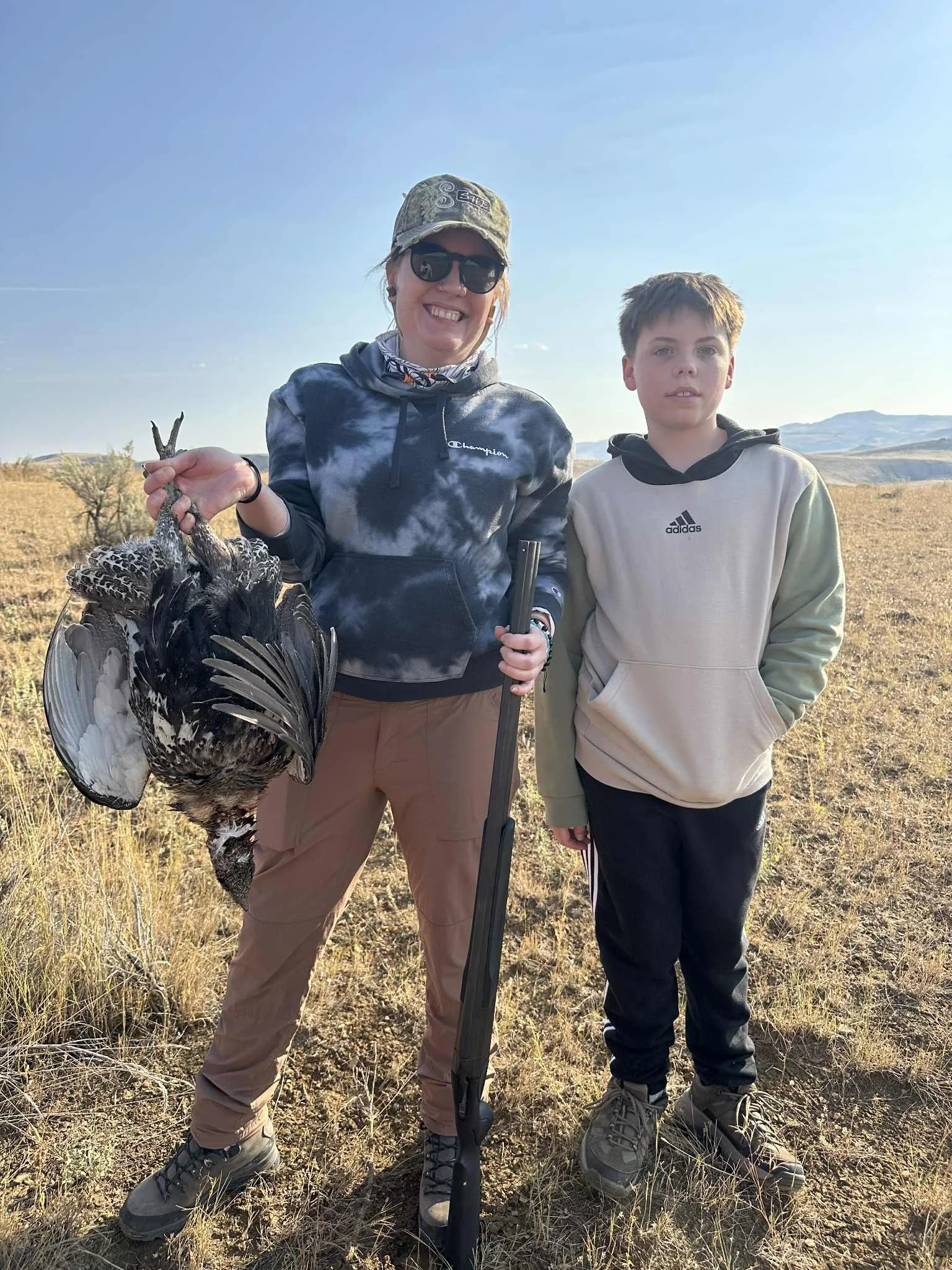
We set out before dawn with the full moon illuminating our way down the highway to our destination. Coffee flowing between my boyfriend Tim Mazac and me, and my 11-year-old son in the back seat, trying to stay awake. I had hunted Ring-necked Pheasants and Mountain Grouse before, but never Sage Grouse. Honestly, I had never even seen one in the wild before! I had no idea what to expect.
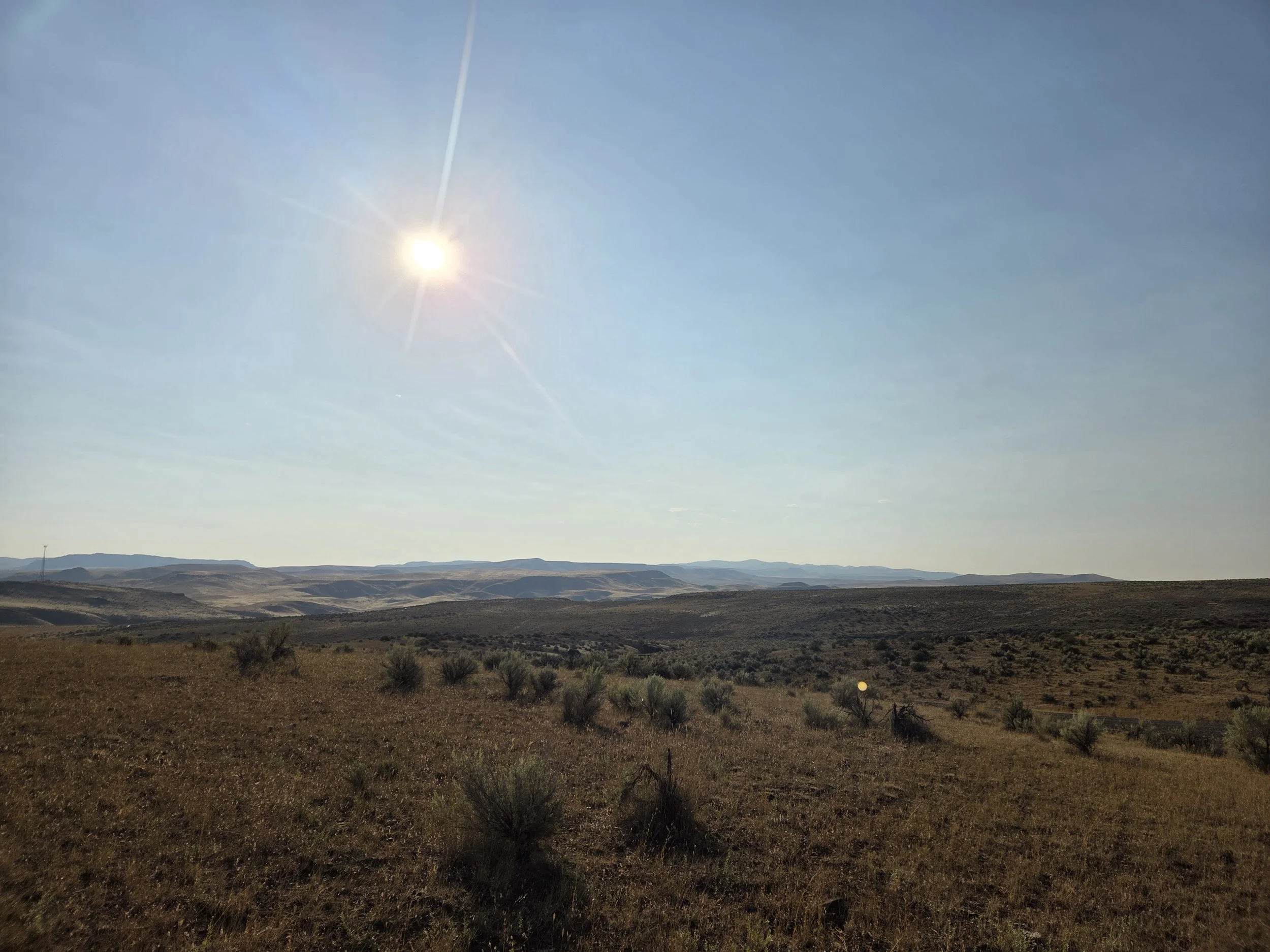
We parked the truck, and Tim unloaded the side-by-side from the trailer, as the sun rose over the rolling golden hills. Watching the sagebrush and bitterbrush illuminate with the dawn is quite beautiful. There is something so incredibly surreal about that moment in the desert. Where the darkness slowly disappears, and suddenly the light reveals a glorious landscape before us. We loaded into the side-by-side and set off down the dirt road in search of sage-grouse. While they are very camouflaged with their surroundings, luckily, my boyfriend is a pro at spotting wildlife.
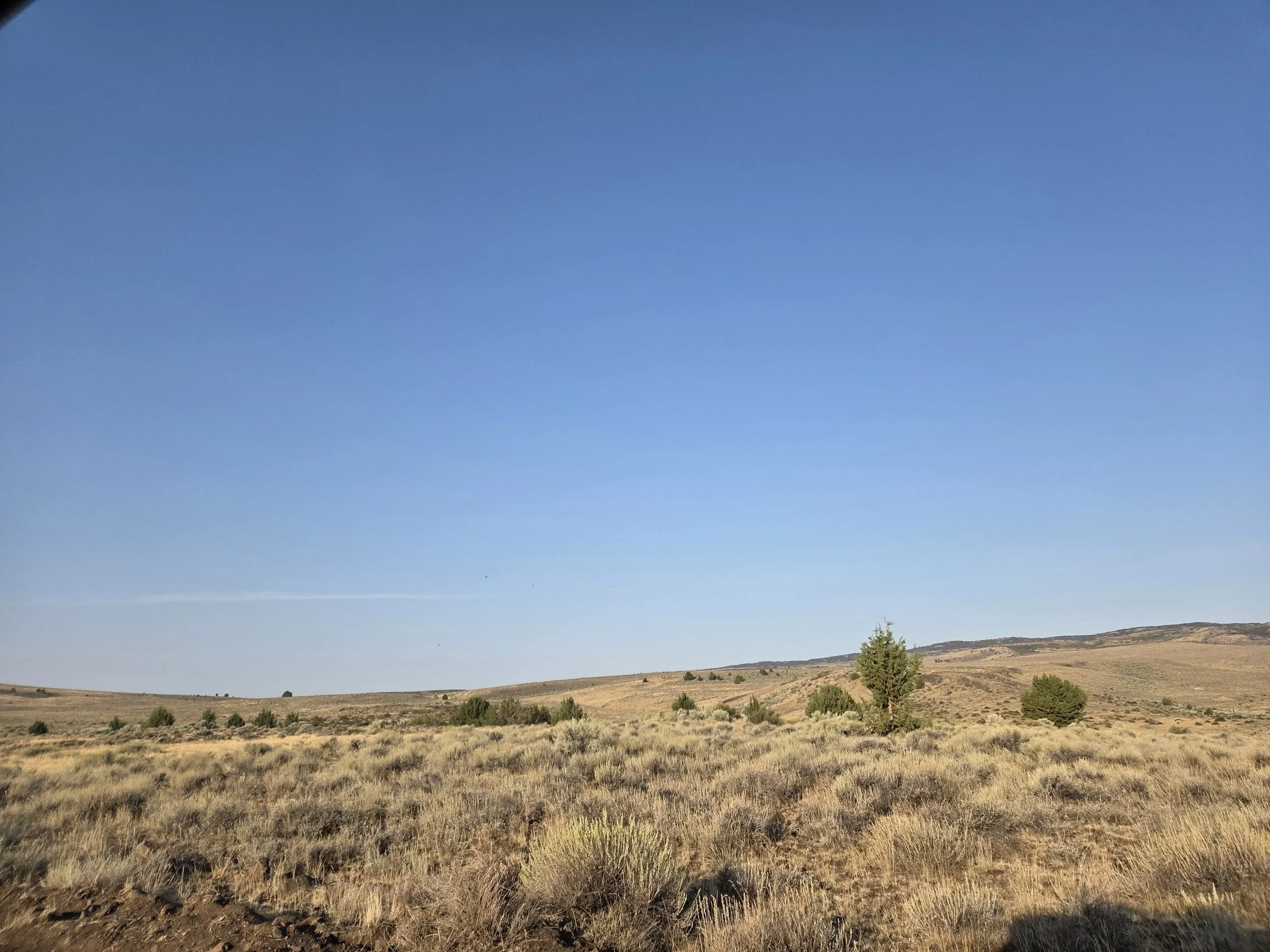
It was only about 10 minutes on the road when Mazac spotted three and abruptly had me get out and get ready to aim his 12-gauge shotgun. Now I’ve shot a shotgun before, but I hadn’t shot his particular one. I got up on my shoulder, aimed, and was ready; however, in the excitement of the morning and not realizing how large his shotgun was, nor being used to it… I missed and gained a rather nasty, large bruise. (Cue the embarrassment & the PAIN, lol)
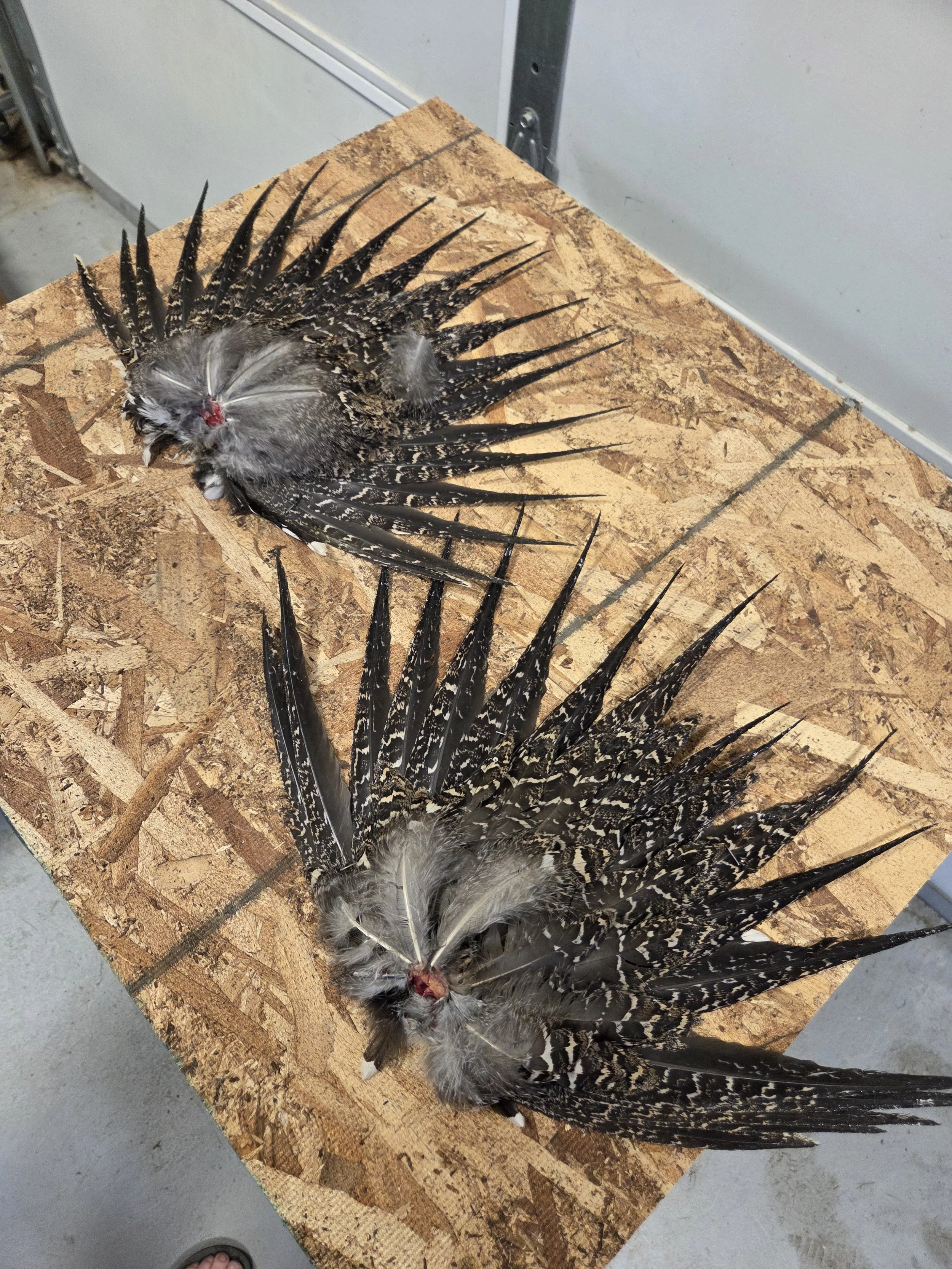
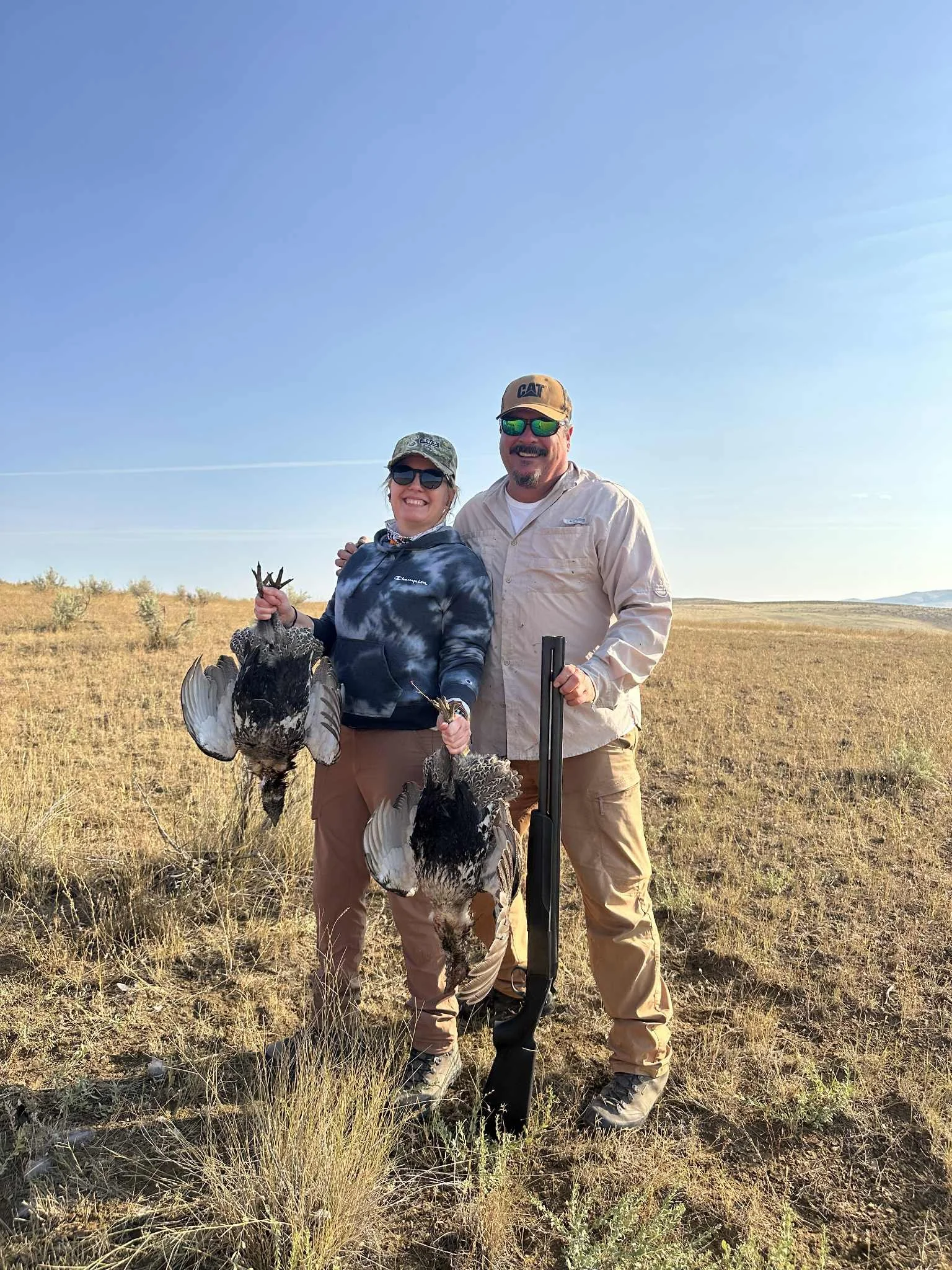
This was all a good thing, as I was just excited to be out on the land in the morning. I didn’t want the hunt to end right away. We loaded back up and set out glassing the hills with binocs to see movement in the sagebrush. The landscape wasn’t offering much in sage-grouse, but we did see plenty of meadowlarks, a few mule deer bucks, a herd of mule deer does, a coyote, and a young badger. Tim recommended we go back towards where the truck was parked and hike to a certain area. As we were traveling down the main road, I was keeping a keen eye on the hills close by to see if I could spot anything. All of a sudden, I noticed a silhouette that wasn’t normal along the hillside, a dark break against the yellow cheatgrass and medusa head. As my head flipped around, I didn’t even need to say anything; Tim knew I must have seen something. He slowed the side-by-side and looked to the left over his shoulder and saw what I had. A massive male, along with a smaller male, is what we spotted initially. With a loaded shotgun (and prepared for the size this time), I aimed and took down the first one, then aimed towards the second, larger male, as more sage-grouse flew from the sagebrush. Finally, just as the day had started to feel hopeless, I was able to fill my tag! We settled down and recounted how many we saw that flew away as well, so we could document them on the paperwork. What an experience! All three of us were excited after the whole ordeal. We took a moment to examine the birds and get loaded up so we could take them home and clip their wings to submit to ODFW.
I was very curious about the taste of sage-grouse, as I’ve heard so many differing opinions. From Stephen Rinella via Meateater, suggesting they taste great, to local friends saying they were gamey and tough. So I had to try it for myself. Tim did an incredible job of battering up one of the breasts, much like a chicken tender, and fried it up. I have to say, I loved it! To describe the meat would be like a very tender finger steak with a slight gamey-ness and sagebrush flavor. All of which fit the bird very well. The meat is dark, though, not pale like chicken. It’s quite beautiful, really.
From the meat to harvesting the tail feathers, and other plumage from the birds to keep for art purposes, utilizing as much of the animal as I can is extremely important to me. To honor these birds' existence. Sage-grouse are often seen as an indicator species of a healthy ecosystem in the sagebrush steppe. Historically, they were an important food source for the Piaute, while also inspiring dances from their mating rituals. These birds are elusive and are a threatened species. I was very happy to see quite a few healthy coveys this year, both in Oregon & Idaho.
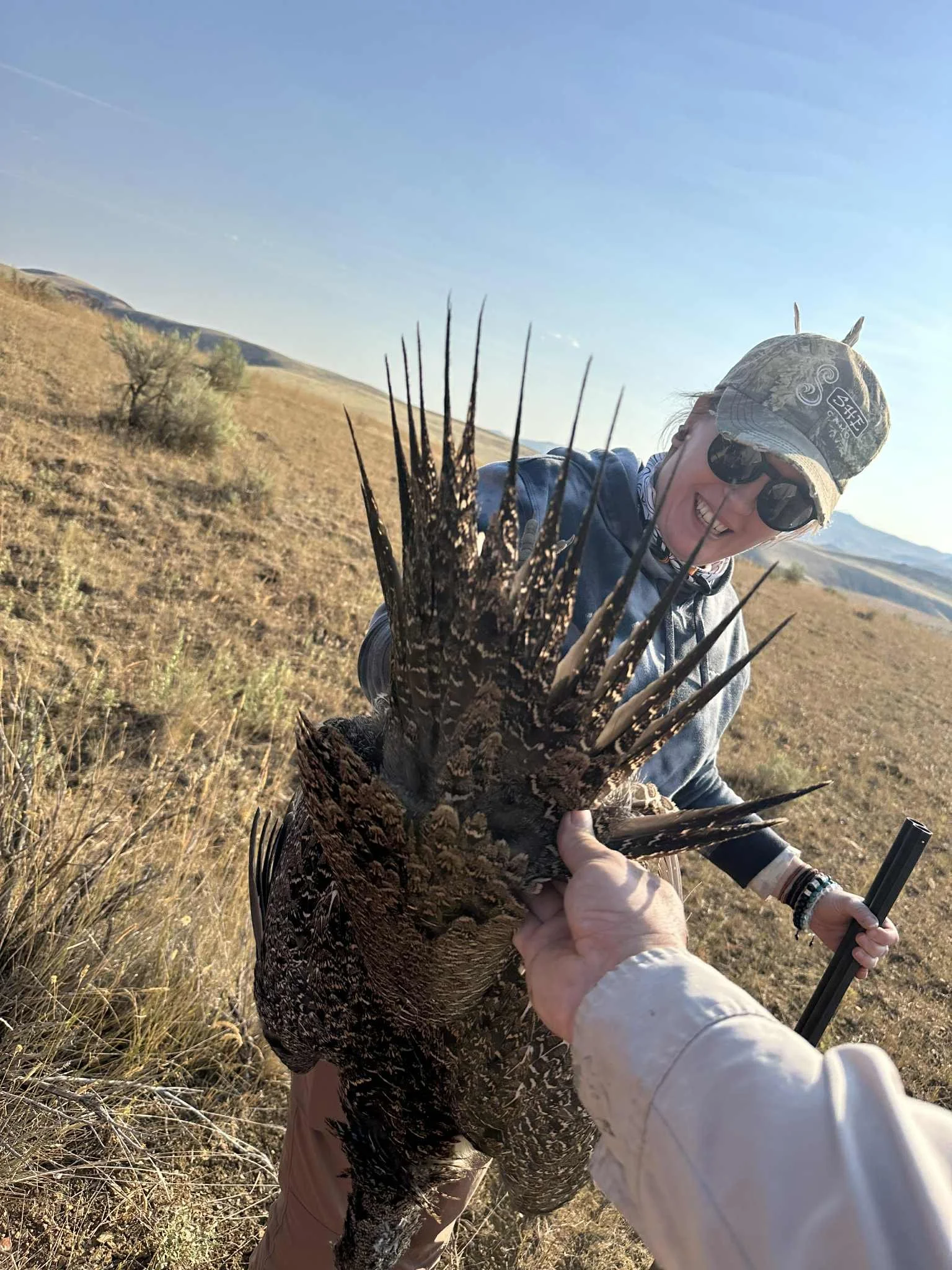
This hunt was a wonderful experience for all of us. A calm, beautiful morning spent in the hills of the Owyhee. With a few sudden bursts of excitement that resulted in harvesting two sage-grouse to fill our bellies, provide crucial data to ODFW, and feathers to adorn art pieces for years to come. The Owyhee gifted us those birds that morning. There isn’t a day that goes by that I am not thankful for all that she bestows on my heart & soul. And now we prep for another adventure, hoping to be fruitful in our work… to bring home a king of the desert, a bull Elk.