

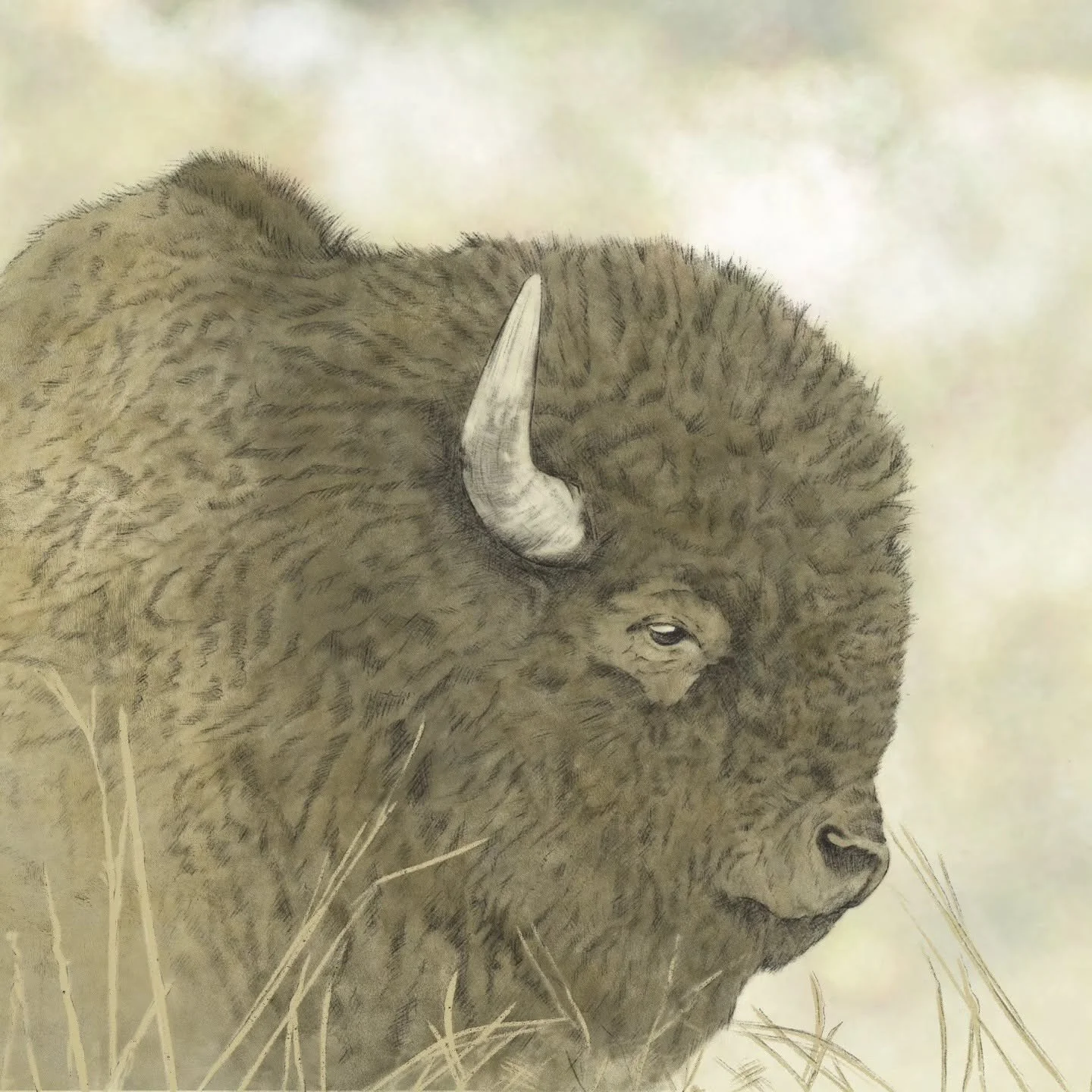
What comes to mind when you think of the American Prairie, or how things used to be prior to colonization of the West? I have a vivid picture in mind, and one particular species is always the focus. The American Bison.
A symbol so significant that it ignites the soul at first sight. The grunts and guttural moans that escape their billowing lungs. As huffs of breath stir the dust below. Their hooves tumble the earth while herds glide along the horizon.
As an avid MeatEater fan, when the new episode of Future Wild, hosted by Mark Kenyon was released on the MeatEater Podcast Network, titled The Triumphant Return of the American Buffalo & Prairie with Scott Heidebrink; I obviously had to give it a listen. Scott Heidebrink is the Director of Landscape Stewardship at American Prairie, where he works to restore bison and other wildlife to the Great Plains and broader efforts to bring this spectacular landscape back to its former glory. Kenyon opens the episode by telling of his epic bison hunt earlier this spring, then transitions to the interview with Heidebrink. This, like many topics dealing with the conservation of wildlife, public lands, and grazing, can be controversial at times and faces many difficult challenges. However, this particular episode not only offers hope for the future but also highlights the importance of grasslands and their effects on ecosystems and surrounding habitats. If you’re interested in learning more about this, PLEASE watch the episode via YouTube or listen on Spotify.
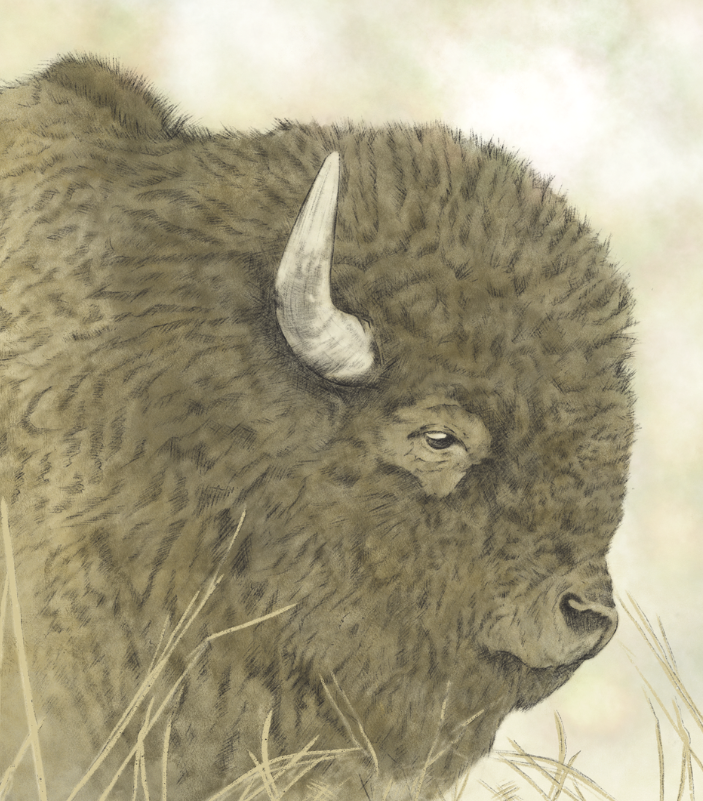
Know that when I’m creating art, these are the stories and podcasts that are filling my ears. My inspiration comes from a conservation mindset, and inspiration fueled by the beauty that fills the West. Bison are among the many symbols of heritage, freedom, and an ideal of what the West should be. I believe that collaboration with traditional stockmen, conservationists, wild game agencies, and sportsmen, we cannot only succeed in creating healthy grassland ecosystems but also provide places for our buffalo to roam.
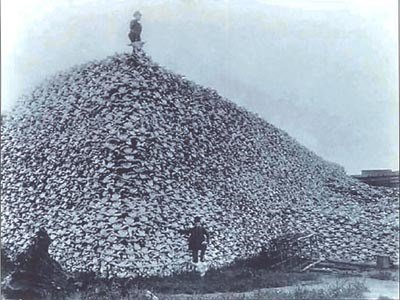
Bison Skull Pile - U.S. National Park Service
If you don’t know already, the history of the American Bison is quite gruesome. For eons, bison ruled the prairies as a keystone species. That was until the 19th century, when the reduction of the wild population was brought by deliberate eradication & commercial slaughter, bringing the bison to a fine line that if crossed would have meant extinction. Some of the main factors in the mass slaughter of the species were the westward expansion and the construction of the transcontinental railroad. This ended up splitting massive herds, pushing them out of historic ranges. Second, dare we say that fashion kills? The international market for bison robes was skyrocketing, while industrial uses for strong hides to utilize for leather were also in demand. Lastly, to be realistic… a large factor in the decline of the population of bison was the deliberate eradication due to the U.S. Federal Government & Military commanders being ordered to slaughter all and any bison they found. This was a direct hit to the indigenous people who relied on the bison as a primary food and economic source. As stated in the Ken Burns documentary, The American Buffalo, “Hunters often took only the hides or tongues, leaving tens of millions of carcasses to rot. Subsequently, a booming 'bone trade' emerged. Millions of tons of bison skeletons were gathered from the plains to be processed into fertilizer and refined sugar, generating massive profits for industries and railroads. “
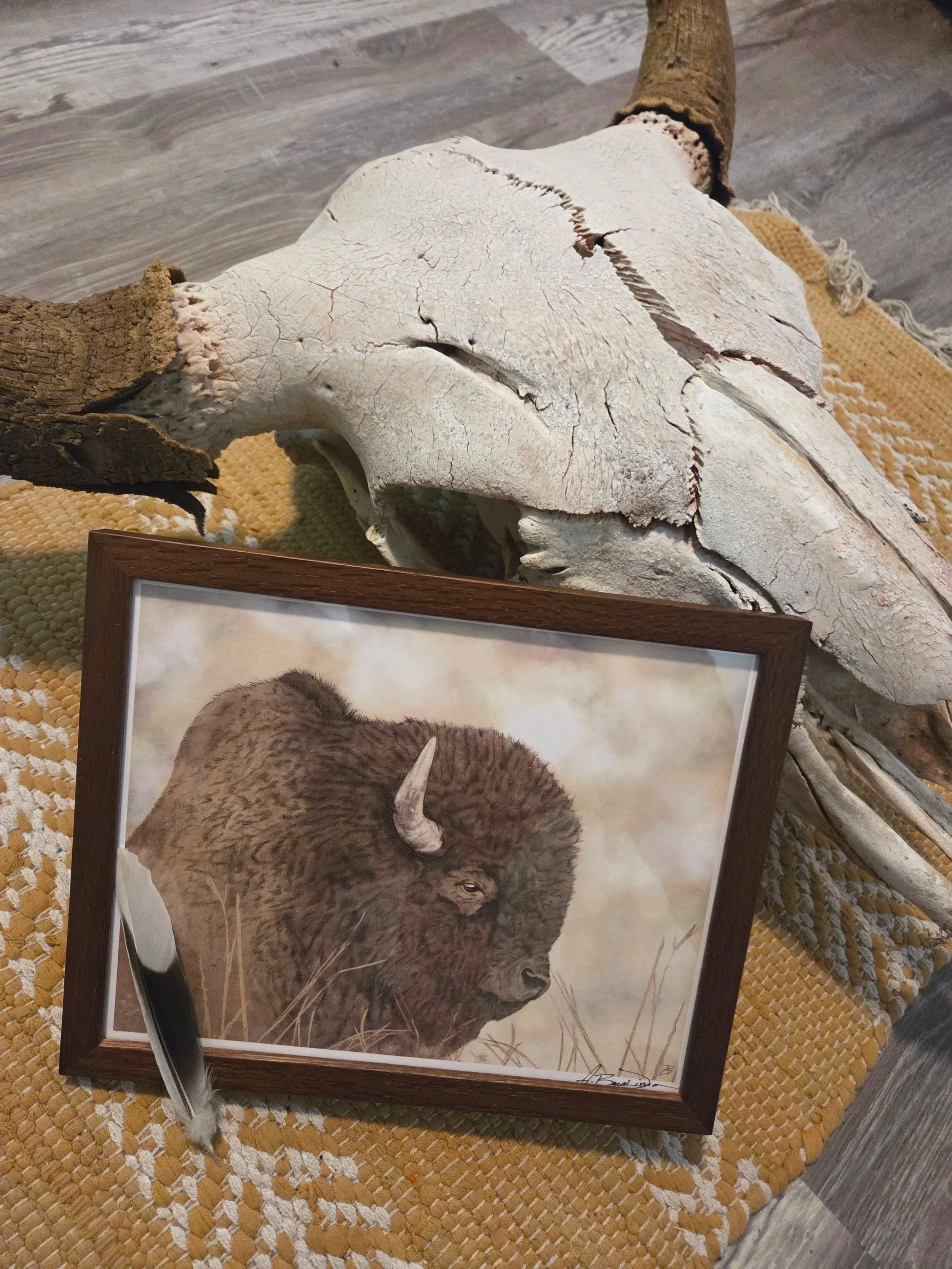
The RELIC came to me late one night. I often create a piece after a repeated experience with a certain species, or am drawn to that animal at the time. The buffalo has been an icon in history and in my art. It seems every so often, if I come across a bison skull, I create art on it or paint a bison. However, this is the first digital print I’ve ever created of a bison for the public. My hope is that when I create a piece of art, it offers a bit of escape for the viewer. Whether that means a memory of a hunt, or merely offering the audience’s hand in daydreaming about sitting in a grassland while a massive bison lies nearby. With each breath, the bunch grass around him quivers. The American Bison is just that… a RELIC. A look back at our past, the culture, and the hardships of a species that has withstood the test of time.
I am curious, though… what do you see when you look at the RELIC?
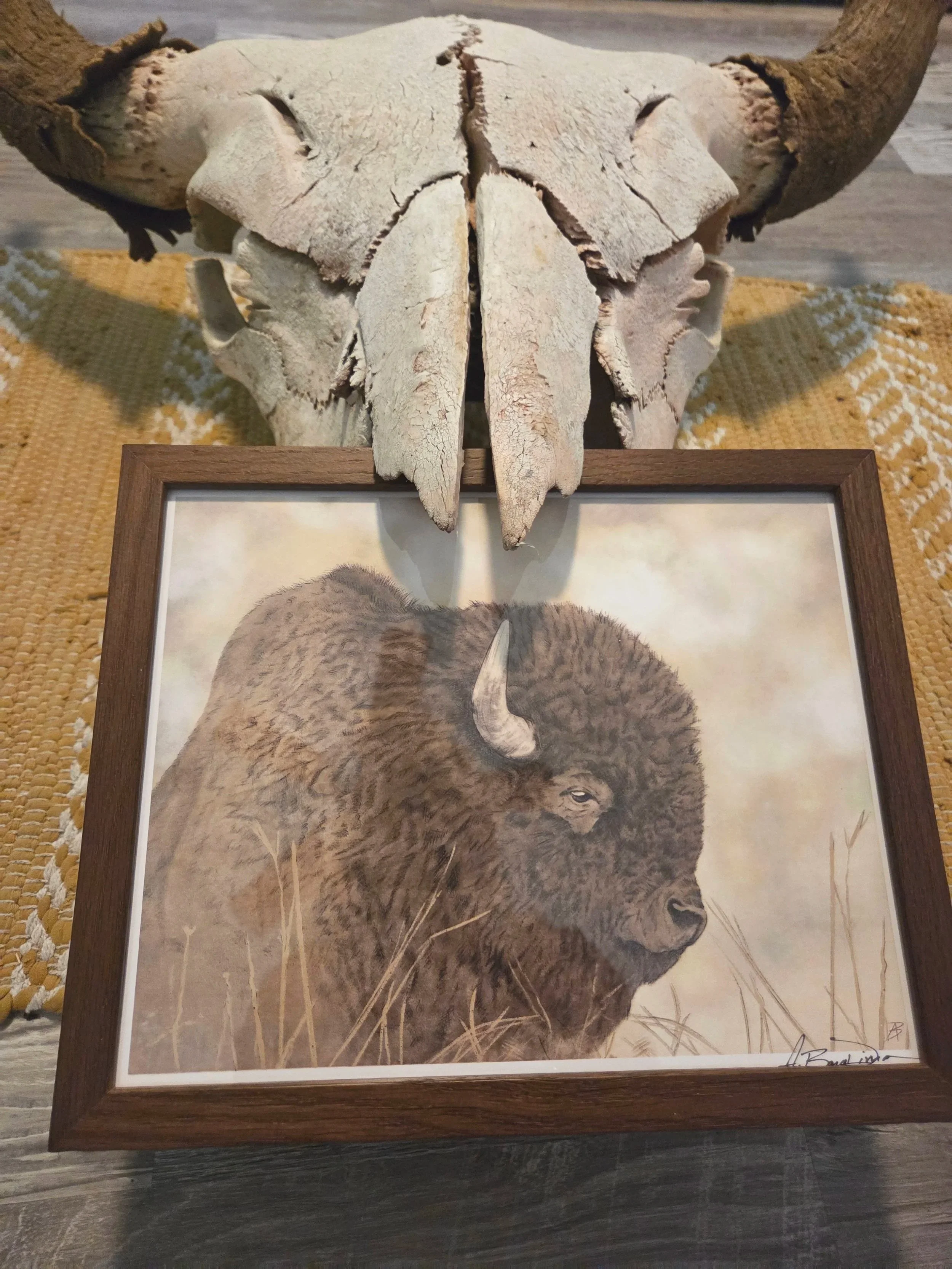
To learn more about Bison restoration, please listen to or watch the episode mentioned above, linked below:
The Triumphant Return of the American Buffalo and Prairie with Scott Heidebrink | Future Wild Ep. 3
Other resources to learn from:
Steven Rinella - American Buffalo
Ken Burns - The American Buffalo Documentary PBS - Homecoming: Documentary brings the story of “The American Buffalo” to the present